The struggle Yidnekatchew Tessema was involved in was much bigger than football. It was part of the wider African struggle against apartheid, racial discrimination, colonial-era inequality, and the marginalisation of Africa in international institutions.
What makes his story particularly interesting is that he used football administration and international sporting organisations as instruments of African political and diplomatic resistance.
Let’s go back to the beginning.
1. First, what was happening in South Africa?
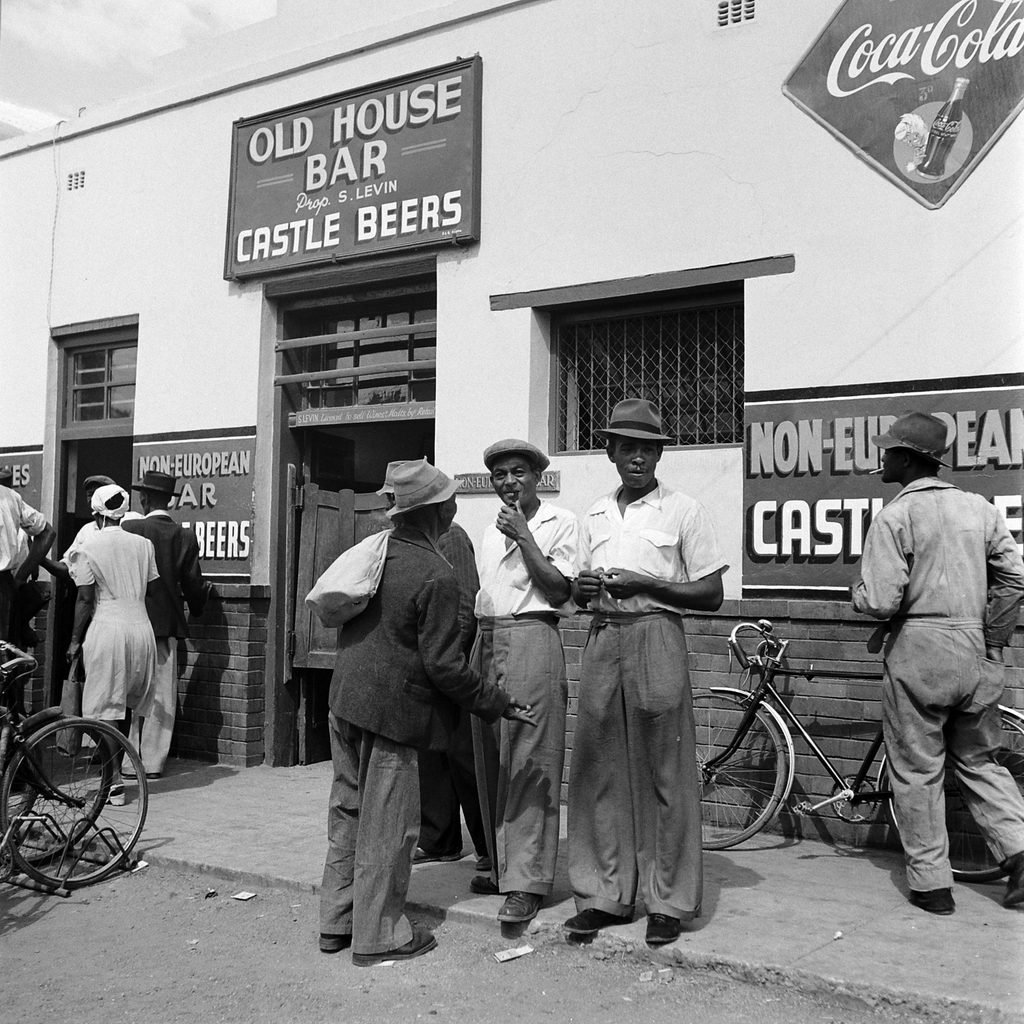
In 1948, South Africa’s National Party formally introduced apartheid as government policy.
Apartheid was a system of institutionalised racial segregation and discrimination that gave the white minority political, economic and social dominance over the Black majority and other racial groups.
This discrimination extended into almost every aspect of life:
- Residential areas were segregated.
- Schools and educational opportunities were separated.
- Public facilities were segregated.
- Black South Africans had severely restricted political rights.
- Employment, economic opportunities and access to resources were unequal.
- Even sporting organisations and competitions were organised along racial lines.
And this is where football enters the story.
Football was not exempt from apartheid.
South Africa had a white-controlled national football association called the Football Association of South Africa (FASA).
It represented the country internationally, but its football administration and national team selection operated within the apartheid system.
Black South Africans, despite football being hugely popular in their communities, were excluded from equal participation in the country’s official sporting structures.
2. The specific conflict: South Africa wanted to participate internationally without abandoning apartheid
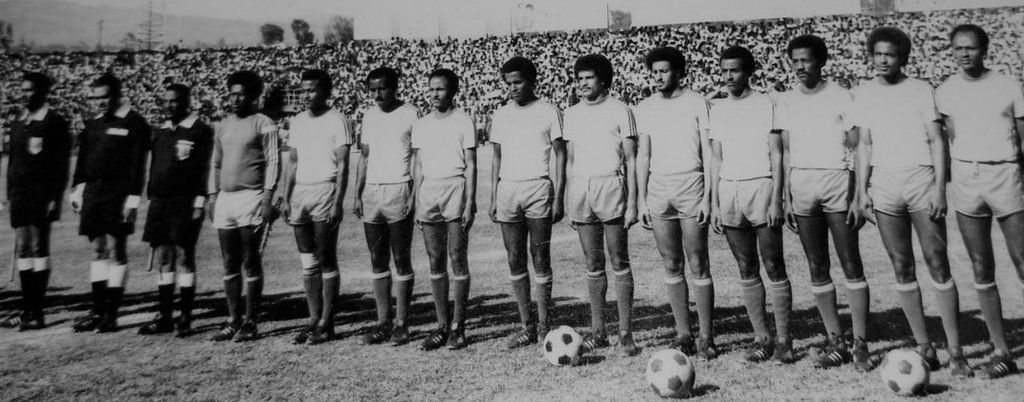
In 1957, the Confederation of African Football (CAF) was established.
Four countries were represented at its founding:
- Egypt
- Ethiopia
- Sudan
- South Africa
Yidnekatchew Tessema was among the Ethiopian representatives.
However, the new organisation immediately faced a serious problem.
South Africa wanted to participate in the first Africa Cup of Nations in 1957, but its government and football authorities would not allow an integrated national team.
They effectively offered CAF two possibilities:
- Send an all-white team.
- Send an all-Black team.
They refused to send a team selected without racial discrimination.
CAF’s position was that a national team representing an African country could not be selected according to racial identity.
Tessema strongly opposed South Africa’s position.
He argued that accepting such a condition would mean allowing apartheid into the African football family.
The disagreement resulted in South Africa being excluded from the competition and subsequently expelled from CAF.
There is a small historical date discrepancy in accounts: some describe the initial exclusion as occurring in 1958, while others identify the formal expulsion as 1960 or 1961. The important point is that the conflict began at CAF’s founding.
3. The struggle moved from African football to FIFA
This is where the story becomes particularly interesting.
CAF’s decision was not enough. South Africa remained connected to FIFA, the international governing body of football.
FIFA was led by Englishman Sir Stanley Rous.
There was a major disagreement between African football leaders and FIFA’s European leadership.
African representatives argued:
“If a country officially practices racial discrimination in its football system, how can it be accepted as an equal member of international football?”
However, FIFA leadership frequently argued that football should remain separate from domestic politics and that FIFA should not interfere in a country’s internal affairs.
This created a serious confrontation.
The timeline illustrates the struggle:
| Year | What happened |
| 1957 | CAF established. South Africa’s racial selection policy creates conflict. |
| 1960 | CAF’s campaign against South Africa’s apartheid football system intensifies. |
| 1961 | FIFA suspends South Africa. |
| 1963 | FIFA readmits South Africa following an investigation and recommendations. |
| 1964 | African opposition leads to South Africa being suspended again at the Tokyo FIFA Congress. |
| 1974 | Tessema pushes for a FIFA rule against racial, ethnic and religious discrimination. |
| 1976 | FIFA formally expels South Africa. |
One important detail: Tessema wasn’t simply protesting. He was working to change the rules and institutional structures that allowed racial discrimination to continue.
4. The 1974 FIFA Congress: Tessema’s strategic achievement
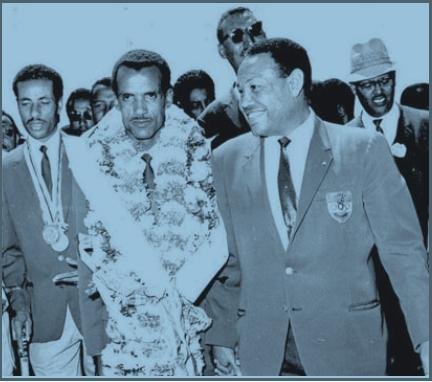
This was arguably one of the most important moments in his campaign.
By 1974, Tessema had become a prominent African football administrator and was serving as CAF’s president.
He introduced a proposal at the FIFA Congress requiring the expulsion of any national football association operating in a country where ethnic, racial or religious discrimination was practised.
Think about the significance of this.
Previously, FIFA could argue that apartheid was an internal political matter and that football should not interfere.
Tessema’s proposal challenged that position by making non-discrimination an explicit condition of FIFA membership.
The proposal was adopted.
Following João Havelange’s election as FIFA president in 1974, the organisation moved towards enforcing this position.
On 16 July 1976, FIFA formally expelled the Football Association of South Africa.
This was a major institutional achievement for the African anti-apartheid campaign.
5. What about the Olympics in 1971?
This part requires a little historical clarification.
South Africa’s exclusion from the Olympic movement was not simply a personal achievement of Tessema.
It was the result of a much wider international anti-apartheid campaign involving African governments, non-racial South African sporting organisations, international activists and Olympic officials.
The process developed over several years:
- In 1963, the International Olympic Committee (IOC) warned South Africa about its discriminatory sporting policies.
- South Africa was excluded from the 1964 Tokyo Olympics.
- The country continued lobbying to return to Olympic competition.
- In 1968, the IOC faced another major confrontation over South Africa’s proposed participation in Mexico City.
- International opposition continued, and South Africa remained excluded.
- In 1971, the Olympic movement’s position against South Africa’s participation became further consolidated.
Tessema was among the African sporting leaders who helped maintain this pressure.
One particularly significant event came in 1976, when 29 African countries boycotted the Montreal Olympics in protest against the IOC’s handling of sporting relations with apartheid South Africa.
6. But Yidnekatchew was fighting another battle: Africa’s recognition in world football
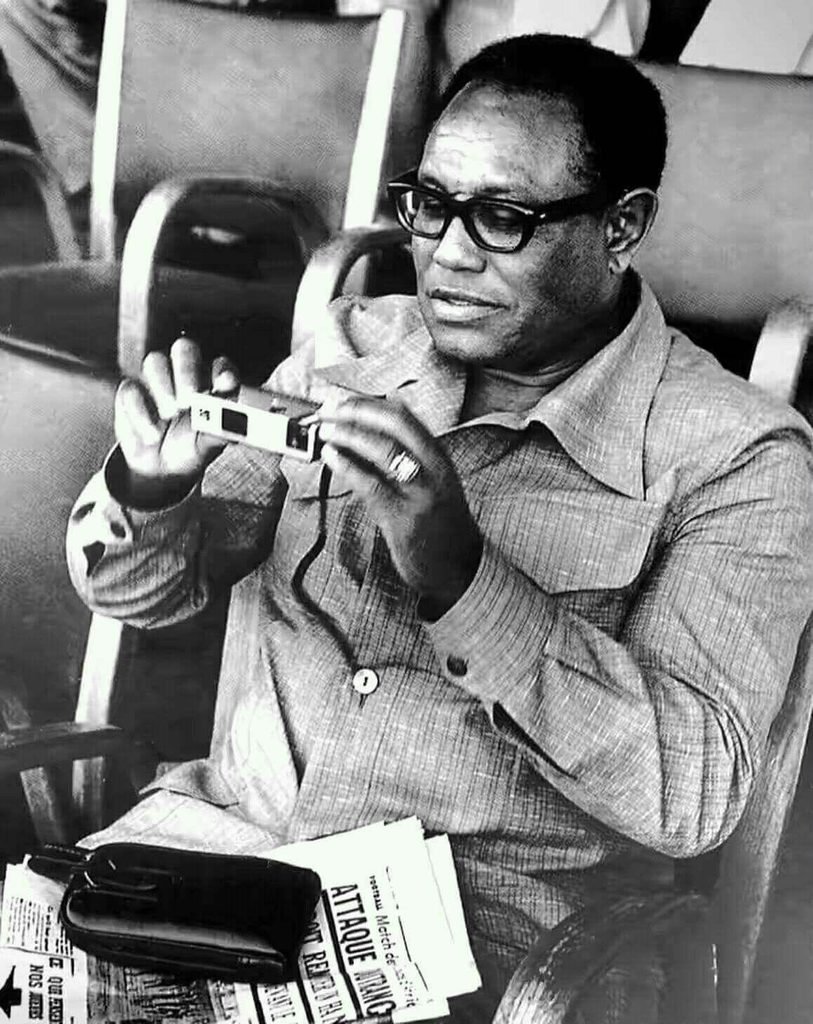
This is another fascinating dimension of his legacy that is sometimes overlooked.
Imagine the international football environment in the 1960s.
European and South American countries dominated FIFA’s administration and international competitions.
African countries were gaining independence, establishing national football associations and joining FIFA.
But their representation and opportunities were extremely limited.
For example, before the 1970 World Cup, Africa had only half a qualifying place.
This meant the African champion had to compete against the Asian champion for a place in the World Cup finals.
Tessema and other African football leaders considered this deeply unfair.
They organised a boycott of the 1966 World Cup qualifying competition.
Their argument was straightforward: Africa had dozens of football associations, yet was not receiving an independent qualifying place.
Eventually, FIFA granted Africa one guaranteed place for the 1970 World Cup.
Morocco became the first African country since Egypt in 1934 to participate in the World Cup finals.
This was another major victory for Tessema and African football diplomacy.
7. Why Yidnekatchew Tessema matters in Ethiopian and African history
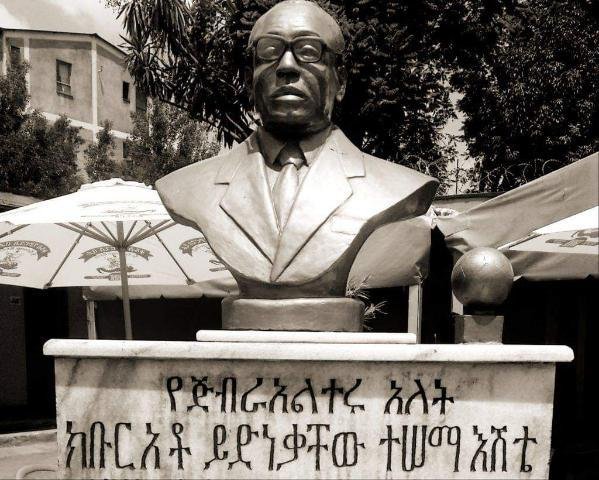
Yidnekatchew Tessema (1921–1987) had several identities throughout his life.
As a footballer
He was a prolific player for Saint George (St. George SA), scoring 318 goals in 365 games, according to a historical account by football writer Tom Dunmore.
As a coach
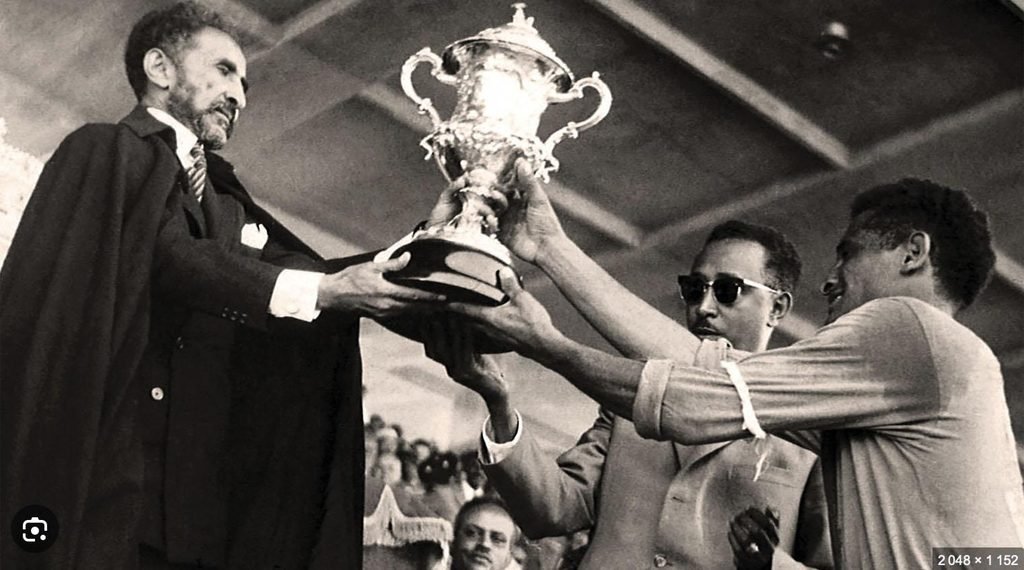
He coached Ethiopia to victory in the 1962 Africa Cup of Nations, Ethiopia’s only AFCON title.
As an administrator
He helped establish CAF, served on its executive committee, became its president in 1972 and remained in that position until his death in 1987.
As an African representative
He worked to increase Africa’s representation, voting power and opportunities within FIFA.
As an anti-apartheid campaigner
He helped turn opposition to racial discrimination into formal rules and membership requirements within international football.
One final thought: There is something particularly significant about an Ethiopian leading this kind of campaign.
Ethiopia had a distinctive place in African history because it maintained its independence during the colonial partition of Africa, apart from the period of Italian occupation (1936–1941). Its historical symbolism and its role in Pan-African solidarity gave Ethiopian representatives an important place in continental affairs.
Tessema carried that African diplomatic spirit into international football.
He wasn’t merely trying to get Ethiopia into the World Cup. He was helping establish the principle that African nations deserved equal standing and that sporting institutions could not simply ignore racial discrimination.
He understood that football was not just a game. It was also a question of dignity, representation, equality and African unity.